ObsidianOS is a modern, Arch-powered Linux distribution designed for users who want reliability, speed, and a desktop experience that stays stable even during risky system updates. Its main innovation lies in the use of an A/B partition scheme, similar to Android and ChromeOS, which allows the system to roll back seamlessly if something goes wrong. This approach makes ObsidianOS a unique choice among Arch-based systems, especially for users who want cutting-edge software without sacrificing stability.
Although Arch is known for its rolling-release nature and sometimes unpredictable updates, ObsidianOS brings a new layer of confidence. With two root partitions working in rotation, the system ensures that the user always has a safe environment to boot into. As a result, it becomes ideal for power users, creators, developers, and anyone who enjoys having the latest software with minimal risk.

What ObsidianOS Aims to Solve
Traditional rolling-release systems offer flexibility, but they also require careful maintenance. Breakages occur, and one wrong update can leave the system unbootable. While backup tools exist, they often depend on user discipline and external storage. ObsidianOS takes a different path. Instead of asking the user to correct mistakes later, it prevents issues from becoming serious in the first place.
Because of this design, ObsidianOS is more resilient and predictable. When the system applies updates, it installs them in the inactive root partition. Only after verification does it switch the active boot slot. If something goes wrong, the system simply rolls back. There is no need for rescue tools, no snapshots to restore, and no panic moments. This built-in protection makes the distribution feel safer than most Arch derivatives.
A Distribution With Multiple Personalities
One interesting aspect of ObsidianOS is the variety of its editions. While the core philosophy remains the same, each flavor targets a different type of user. Because of that, the distribution adapts easily to different workflows and hardware setups.
The main editions include:
- Base Edition – A minimal Arch-based system for advanced users who want full control over their environment.
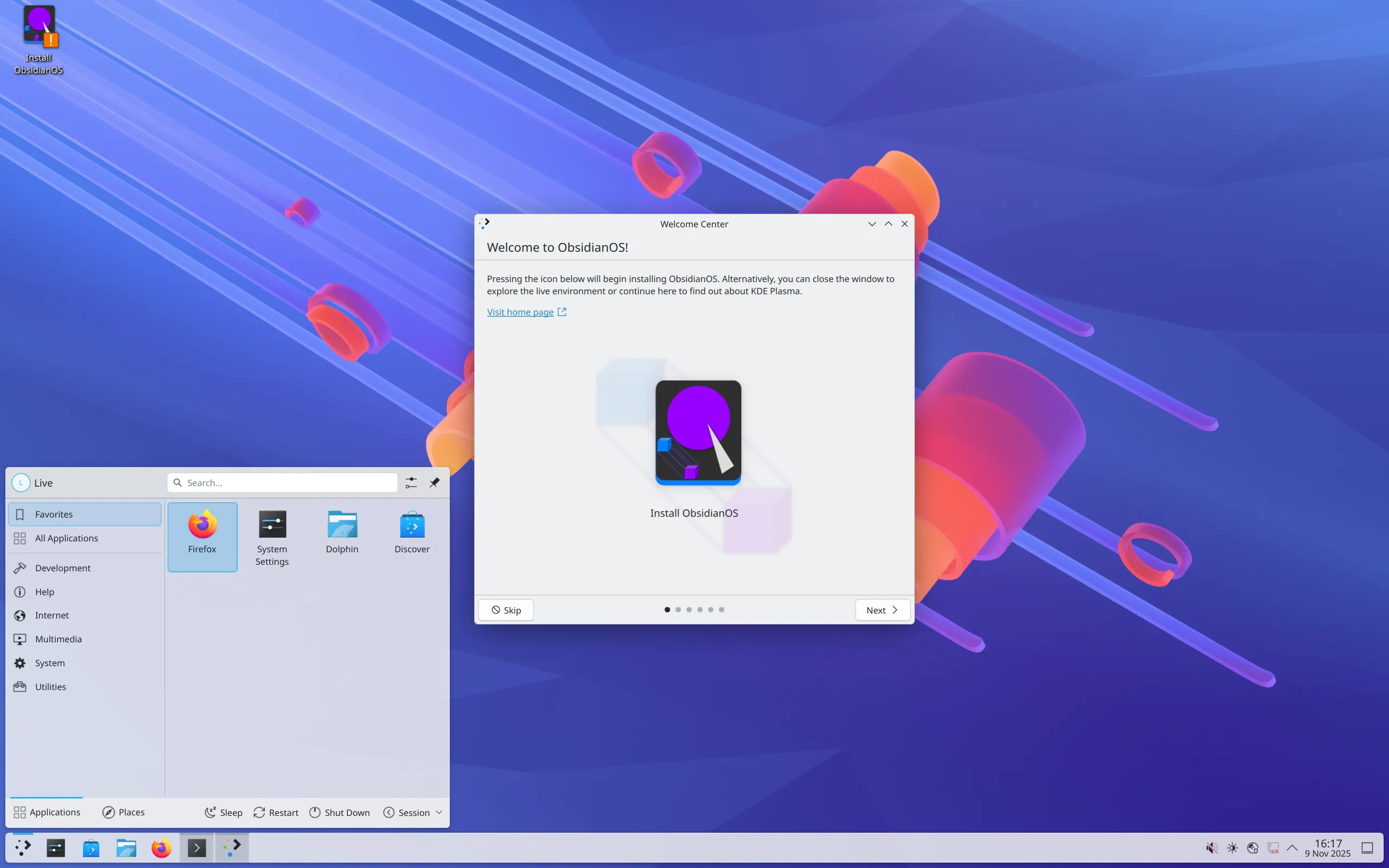
- KDE Plasma Edition – A polished desktop experience with Plasma’s flexibility and modern user interface.
- COSMIC Edition – A forward-looking desktop powered by System76’s COSMIC DE, ideal for users who want cutting-edge Wayland features.
In addition to these Arch-based versions, ObsidianOS also provides a special Void-based flavor. This one targets users who prefer a simpler init system, independent packaging, and a lightweight framework. Unlike the Arch editions, the Void release ships without a graphical desktop. Therefore, it appeals to administrators, hobbyists, and users who enjoy building systems from scratch.
Why the A/B System Matters
Unlike standard snapshot systems such as Timeshift or Btrfs rollback tools, the A/B layout isn’t an add-on feature. It is part of the operating system’s core structure. Because of that, every system update behaves in a predictable way. Updates never touch the currently running environment. Instead, the new version installs into the alternate partition. Once the process finishes, the system switches from partition A to partition B or vice versa.
This structure eliminates many common problems. For example:
- A failed update does not break the running system.
- Users can reboot into the previous slot instantly.
- The OS stays consistent even during power loss mid-update.
- Each boot slot acts as a fallback environment.
Because the user never interacts directly with the update mechanism, the experience becomes smoother and far more predictable. And since ObsidianOS uses ext4 exclusively, it avoids the complexity of snapshots and layered file systems. For users who enjoy a stable yet modern Linux environment, this simplicity becomes an advantage.
Desktop Environments That Fit Different Workflows
ObsidianOS does not lock users into a single desktop. Instead, each edition highlights a different way of interacting with the system. As a result, it feels flexible and adaptable to modern computing trends.
KDE Plasma Edition provides a refined, elegant desktop with deep customisation options. It balances performance and modern UI features while remaining user-friendly. Many users choose this variant because it offers a complete experience right after installation.
COSMIC Edition brings the new COSMIC desktop, developed primarily for System76 hardware. It targets users who want a cool, forward-thinking design. With its Wayland-first approach, COSMIC ensures smoother animations, modern window management, and better support for high-resolution screens.
Base Edition removes the layer of graphical desktops and allows developers and advanced users to construct their environment from the ground up. This release is especially useful for people who enjoy tinkering and optimizing every part of the OS.
Who Should Use ObsidianOS?
ObsidianOS appeals to a wide range of users, but some groups benefit more from its design:
- Developers who need a stable Arch environment for coding, containers, and cutting-edge tools.
- Linux power users who enjoy rolling releases but want a safer update process.
- Wayland adopters who want to explore COSMIC or Plasma under modern protocols.
- Experimenters who like trying new systems without fear of breakage.
- Void users who want a minimal environment with fast boot times and manual control.
Because the OS reduces the risks typically associated with rolling-release distributions, it also becomes suitable for professionals who need both stability and new software. This combination is rare among Arch-based systems.
Performance, Hardware Support and Daily Use
Despite being a young project, ObsidianOS runs smoothly on most modern x86_64 systems. Boot times are fast due to its clean structure and absence of unnecessary services. Desktop responsiveness benefits from recent kernel versions and well-tuned defaults.
Furthermore, since it is based on Arch Linux, package availability is extensive. Users have access to the Arch official repositories and the AUR, which provides a giant ecosystem of software. This broad availability makes the distribution ideal for creative workflows, engineering projects, and gaming setups.
When running the system daily, users notice how predictable the environment becomes. Because of the A/B partition model, updates no longer feel dangerous or disruptive. Even after large system upgrades, the OS remains stable. This reliability encourages experimentation without fear of breaking the machine.
The Vision Behind the Project
ObsidianOS aims to merge innovation with safety. Many distributions focus on one side or the other. Either they choose stability and slow updates, or they embrace speed and accept breakages. ObsidianOS goes beyond that. By adopting the A/B methodology, the project demonstrates that modern Linux systems can have both speed and resilience.
The developers want users to trust their system. They want updates to feel safe yet modern. They also want to give users choices. Instead of forcing one desktop, one init system, or one philosophy, they provide multiple editions. Because of that, ObsidianOS reaches a large audience without losing its technical identity.
Final Thoughts
ObsidianOS is an ambitious Arch-based distribution that successfully introduces reliability to a rolling-release world. With its A/B partition design, multiple desktop editions, and a Void-based variant for advanced users, it stands out as a unique and forward-thinking Linux system. Users who enjoy modern software but dislike instability will find a comfortable and secure home here.
You can learn more or download the latest release from the project’s official website: ObsidianOS Linux