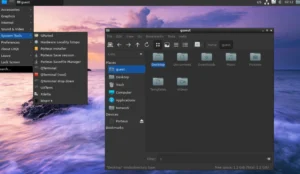
Side GNU/Linux stands out as an independently developed distribution that avoids mainstream bases like Debian, Ubuntu, or Arch. Instead, it builds its own ecosystem powered by the PiSi package manager, the Simple Desktop Environment (SDE), and the minimalist Openbox window manager. This combination results in a lightweight, flexible, and highly efficient system aimed primarily at experienced Linux users who prefer simplicity, transparency, and control.
What Makes Side GNU/Linux Unique?
Side GNU/Linux differentiates itself from the crowded Linux landscape by prioritizing simplicity, speed, and independence. Because it isn’t based on any major distribution, users interact with a system shaped entirely by the project’s own philosophy and tooling.
The core differentiators include:
- Independently built with its own repositories and ecosystem.
- PiSi package manager, known for fast performance and clean dependency handling.
- Simple Desktop Environment (SDE), a fork of LXDE that focuses on a clean, classic desktop experience.
- Openbox window manager for exceptional speed and low resource usage.
- Lynx web browser included by default for text-mode web access.
- Options for text-mode installer or Calamares graphical installer.

Why This Matters
Side GNU/Linux is a good example of the “independent spirit” of the Linux world. While most distributions fork from Debian, Ubuntu, Fedora, or Arch, very few build their own infrastructure, tooling, and stack from scratch. This independence means:
- Greater flexibility in development direction.
- A more educational environment for users who want to understand Linux deeply.
- A reduced attack surface due to fewer preinstalled components.
- Lightweight components ideal for older hardware or minimal setups.
For power users and enthusiasts, this makes Side GNU/Linux an appealing and refreshing alternative.
PiSi Package Manager: Lightweight and Efficient
PiSi, originally created for the Pardus Linux project, is fast, transparent, and cleanly designed. It uses Python-based package scripts, delta updates, and strong dependency management. Compared to apt, dnf, or pacman, PiSi is intentionally lightweight and easier to inspect. For users who enjoy understanding exactly how their system is built, PiSi provides a clear advantage.
Key PiSi features include:
- Fast installation and updates.
- Readable package build files.
- Delta packages for efficient upgrades.
- Simplicity over complexity.
Simple Desktop Environment (SDE) and Openbox
SDE is a fork of LXDE designed to provide a classic desktop that remains modern and responsive. Paired with the Openbox window manager, SDE delivers a layout that feels familiar and uncluttered, while keeping RAM usage extremely low — often under 200–300 MB in real-world usage.
This setup is ideal for:
- Older machines.
- Virtual machines.
- Minimalist desktops.
- Users who prefer speed over animations.
Lynx: A Classic Text-mode Browser
Lynx is one of the oldest and most stable web browsers still maintained. Side GNU/Linux includes it by default, reinforcing the distribution’s minimalist philosophy. While it doesn’t handle modern JavaScript-heavy websites, it’s perfect for documentation, lightweight browsing, and system recovery.
Installation Options: Text-mode or Calamares
Users can choose between:
- Text-mode installer — ideal for advanced users who prefer full control.
- Calamares graphical installer — beginner-friendly and fast.
This dual approach makes the system accessible while still catering to the advanced audience that Side GNU/Linux targets.
Performance and System Footprint
Side GNU/Linux is very lightweight. With SDE and Openbox, it performs well on old or low-resource hardware but also scales smoothly on modern systems. Its independent base means fewer background services compared to larger distros, resulting in faster boot times and a highly responsive desktop.
Ideal Use Cases for Side GNU/Linux
This distribution is best suited for:
- Advanced Linux users who enjoy independent or niche ecosystems.
- Developers or enthusiasts seeking a lightweight, distraction-free system.
- Users curious about PiSi, SDE, or alternative Linux design philosophies.
- Older or resource-limited hardware that needs a minimal desktop.
Should You Choose Side GNU/Linux?
If you want a fast, simple, and independent Linux environment with unique tooling like PiSi and SDE, Side GNU/Linux is absolutely worth exploring. It’s not designed for beginners, but experienced users will appreciate its speed, minimalism, and clean architecture.
Download Side GNU/Linux
Visit the official Side GNU/Linux website to download the latest version: