Astra Linux is a commercial Linux distribution built on the Debian “Stable” branch and developed by Astra Group in Russia. Originally engineered to meet the stringent requirements of the Russian military and intelligence agencies, it later expanded into education, healthcare, industrial systems, and state institutions seeking to reduce reliance on Microsoft Windows and other Western proprietary platforms. Designed with a strong emphasis on military-grade security and long-term reliability, Astra Linux stands as one of the most specialized and highly certified operating systems in the global Linux ecosystem.
The distribution distinguishes itself through its rigorous security model, deep customization layers, custom graphical interface, and strict adherence to Russian government certification standards. Today, Astra Linux powers thousands of mission-critical infrastructures and continues to evolve as a comprehensive enterprise platform. Although it is commercial software, its influence extends beyond national borders due to its unique positioning as a secure and tightly controlled Linux environment.
Understanding the Vision Behind Astra Linux
Astra Linux was conceived during a period when Russia sought technological independence and digital sovereignty. The goal was to create an operating system capable of running sensitive workloads, complying with strict military requirements, and replacing proprietary systems prone to security risks or geopolitical control.
This vision shaped Astra Linux into a distribution that prioritizes:
- Maximum security through a custom security framework.
- Control and auditability at every system level.
- Long-term support for mission-critical deployments.
- Reduced dependency on foreign software and ecosystems.
- Enterprise stability based on Debian’s rock-solid foundation.
This approach makes Astra Linux unlike traditional Debian derivatives. Instead of focusing on community use or general-purpose desktops, Astra is tailored for hardened environments with strict compliance requirements.

A Closer Look at Astra Linux Editions
Astra Linux offers two main editions, each built for different use cases and certification levels. Both are commercial products, and the ISO images are available only through its official channels.
- Astra Linux Special Edition: A high-security commercial release designed for defense, government, critical infrastructure, and industrial control systems. It includes robust security extensions, enterprise-grade support services, and the highest security certifications available in Russia.
- Astra Linux Common Edition: A lighter version based on older Debian releases, also commercial, but aimed at general enterprise deployments. While less hardened than the Special Edition, it still maintains a strong security model and corporate-ready tools.
Both editions integrate deep modifications to the system core, security subsystems, and user interface, supporting severe operational constraints and audit requirements.
Security Architecture and Compliance
The defining attribute of Astra Linux is its advanced security stack. It features a custom Mandatory Access Control (MAC) system known as “Astra Linux Security Module”, inspired by but not identical to SELinux or AppArmor. The model enforces strict process isolation, resource control, and multi-level data protection, preventing unauthorized access even from privileged users.
Astra Linux also complies with Russia’s top security certifications, including:
- FSTEC certifications for information security.
- Ministry of Defense (MoD) certifications.
- Government-class secrecy readiness for classified data.
- EAL4+ equivalent standards in several components.
These certifications make Astra Linux suitable for secure communication systems, military planning environments, industrial SCADA infrastructure, and state facilities requiring maximum isolation and auditability.
User Interface and Desktop Experience
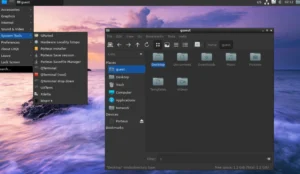
The distribution ships with its custom desktop environment called Fly Desktop, built for both usability and high security. It resembles a classic desktop UI, enabling institutions to migrate from Windows with minimal training. Despite its secure focus, Fly Desktop offers a full graphical experience with menu-driven configuration tools, administrative utilities, and enterprise management features.
Astra Linux includes a curated software selection, such as office suites, communication tools, development utilities, and system monitoring applications—all tested, controlled, and compliant with security guidelines.
Enterprise and Government Adoption
Over time, Astra Linux evolved beyond its military origins and found broad adoption across many sectors. Schools, healthcare institutions, public administration, and industrial facilities implemented Astra Linux as part of nationwide strategies for digital independence.
Key reasons behind its widespread adoption include:
- Vendor independence and open-source transparency.
- Strong national support and development roadmap.
- Reduced licensing costs compared to proprietary systems.
- High levels of customization for institutional deployment.
- Integrated tools for managing large networks and fleets of machines.
Its ecosystem also includes server editions, embedded versions for industrial hardware, and secure mobile platforms for government agencies.
Software Ecosystem and Package Management
Astra Linux remains compatible with Debian’s package structure, though many packages undergo modifications or security vetting before they reach the system repository. The distribution integrates its own repositories, tools, and LTS kernels tailored for its certified environments.
While it inherits much of Debian’s stability, Astra Linux adds a controlled software lifecycle to ensure every component meets regulatory and security requirements. This makes it ideal for secure deployments but less flexible than community-driven rolling or semi-rolling systems.
Who Should Use Astra Linux?
Astra Linux is engineered for organizations operating in security-sensitive environments. It is not intended for hobbyists, casual desktop users, or typical open-source enthusiasts. Instead, it suits:
- Government agencies handling classified or restricted data
- Military and defense sectors requiring certified systems
- Healthcare institutions needing secure patient data workflows
- Industrial companies operating critical control systems
- Educational institutions transitioning to sovereign software
- Enterprises seeking certified, long-term secured Linux platforms
If your environment demands strict compliance, controlled updates, high security, and long-term validation, Astra Linux becomes a compelling option.
Why Astra Linux Stands Out
Astra Linux’s strength lies in its unique blend of Debian stability, security-focused engineering, and deep certifications rarely found in consumer Linux distributions. Its long-term deployments, enterprise tools, and controlled ecosystem make it one of the most distinctive Linux distributions available today—especially in regulated or sensitive sectors.
While it is fully commercial and not intended for casual users, Astra Linux successfully demonstrates what a nation-scale, security-centric distribution can achieve when built with precision, rigor, and purpose-driven development.
Getting Started with Astra Linux
If you are exploring secure operating systems for enterprise, government, or industrial use, Astra Linux offers a hardened platform backed by strong certifications and commercial support. The distribution provides documentation, product details, and access to purchase and download ISO images through its official channels.
To explore product information, view documentation, or obtain the latest ISO, Get Download of the ISO.