Mobile Linux has evolved dramatically over the years, but few projects represent true openness in the mobile space as well as Maemo Leste Linux Distribution. Built on Devuan and designed for touch-enabled devices, Maemo Leste continues the legacy of Nokia’s groundbreaking Maemo OS, offering a free, flexible, and community-driven alternative to mainstream mobile platforms. Unlike the original Nokia Maemo—limited to a specific device—Maemo Leste embraces diversity, supporting smartphones, tablets, PDAs, and even virtual images for x86_64 machines. Its mission is clear: provide a transparent and accessible mobile Linux experience for developers, enthusiasts, and everyday users seeking a more independent and customizable environment.
As the landscape of mobile technology becomes increasingly closed, Maemo Leste emerges as a refreshing option for anyone who values control, adaptability, and open development. With modern Devuan foundations, a mainline Linux kernel, and a revived Hildon interface, it blends classic design with long-term sustainability. This post explores everything you need to know about Maemo Leste Linux Distribution—its architecture, supported devices, features, usability, and why it stands out for those wanting an authentic Linux mobile experience.
Understanding Maemo Leste Linux Distribution
Maemo Leste is a direct continuation of the Nokia Maemo project, originally discontinued in 2011. It revives the core principles: a highly customizable mobile interface, a Linux-driven foundation, and a simple yet powerful user experience. Built on Devuan, a systemd-free fork of Debian, Maemo Leste emphasizes transparency, stability, and user freedom. This design choice ensures long-term reliability and allows the system to remain small, efficient, and highly adaptable to various hardware platforms.
The system uses the mainline Linux kernel whenever possible, giving users access to ongoing improvements, better device support, and modern security updates. On top of this kernel runs the classic Hildon framework—originally developed by Nokia for touch devices—paired with the lightweight Matchbox window manager. This combination enables a responsive mobile environment tailored for stylus or finger input while keeping resource usage minimal.
Key Features of Maemo Leste Linux Distribution
Maemo Leste introduces an impressive collection of capabilities designed to bring a real Linux desktop experience to handheld devices. Below are some of its most notable features.
- Touch-optimized Hildon interface that remains intuitive and lightweight.
- Mainline Linux kernel for better performance and modern support.
- Devuan base, ensuring stability and predictable system behavior.
- Support for dozens of smartphones, tablets, and PDAs.
- Virtual images for users who want to test Maemo Leste on x86_64 systems.
- Open development model with transparent community-driven improvements.
- Flexible application ecosystem with GTK-based tools and growing compatibility.
These features enable Maemo Leste to provide a mobile environment that feels familiar yet highly adaptable. Unlike many modern systems that limit customization, Maemo Leste encourages modification and exploration while still being suitable for everyday use on supported hardware.
Supported Devices and Hardware Compatibility
One of the reasons Maemo Leste stands out in the mobile Linux ecosystem is its wide device support. It targets both legacy devices and modern open-hardware platforms, giving users multiple entry points depending on their needs and device availability.
- Nokia N900 – The classic Maemo device, fully supported with many working features.
- Motorola Droid and Bionic – Popular early Android devices repurposed with open software.
- PinePhone – The modern, community-friendly Linux smartphone.
- PineTab – A tablet option for testing and productivity.
- Allwinner-based devices – Widely available and affordable options.
- Virtual x86_64 images – Useful for development, testing, or desktop simulation.
This variety means users can explore Maemo Leste regardless of whether they own older hardware or want to experiment with Linux-first smartphones such as the PinePhone. The availability of virtual images also makes it possible to test the environment on desktop systems before installing it on physical devices.
User Interface and Experience: Hildon and Matchbox
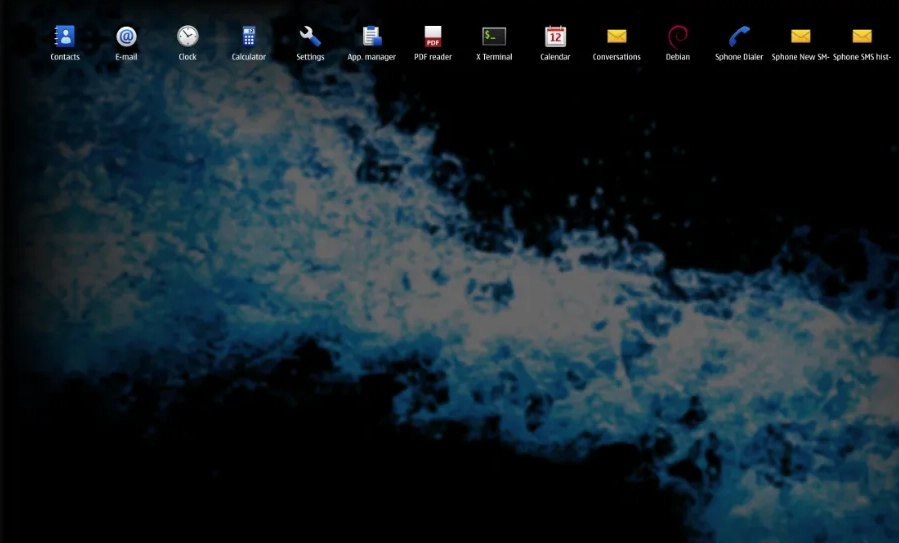
At the heart of Maemo Leste’s appeal is the revived Hildon interface, originally engineered for small screens and stylus-based navigation. The interface uses a combination of GTK-based applications and panels, offering a clean and functional approach that balances simplicity with flexibility.
Matchbox, the distribution’s window manager, is exceptionally lightweight and optimized for mobile form factors. It supports single-window focus, intuitive window switching, and minimal screen clutter—key elements for handheld usability. While Hildon preserves the nostalgic feel of early mobile Linux, it also benefits from modern improvements and ongoing updates to increase stability and performance.
Software Ecosystem and Application Support
Because Maemo Leste is based on Devuan, it inherits access to a vast collection of open-source software. GTK apps integrate best with the system’s UI, but terminal-based applications and lightweight GUI tools work equally well. As development progresses, more applications are adapted to the mobile environment, improving usability for everyday tasks such as browsing, messaging, media playback, and personal productivity.
Advanced users can install additional software using the apt package manager, maintaining full control over the system’s configuration. This flexibility, combined with its transparent development processes, positions Maemo Leste as an excellent environment for experimentation, customization, and long-term personal use.
A Free Mobile Linux Option for Enthusiasts and Developers
Maemo Leste’s mission is to deliver a mobile Linux system that remains unrestricted by corporate limitations or closed ecosystems. Its focus on freedom, transparency, and device diversity makes it ideal for users who want full control over their software, developers working on mobile Linux applications, and anyone interested in alternative computing platforms.
Whether you want to revive older hardware, explore open mobile computing, or test software on a stable Linux foundation, Maemo Leste provides the flexibility needed without sacrificing performance or usability.
Why Maemo Leste Linux Distribution Stands Out
Maemo Leste Linux Distribution demonstrates that open-source principles can thrive in the mobile world. With its Devuan base, touch-optimized interface, mainline kernel support, and wide hardware compatibility, it provides a powerful alternative to traditional mobile operating systems. If you want to explore more Linux distributions designed for practical everyday use, check out our full collection of in-depth Linux reviews. To learn more about the project or download the latest images, visit the official Maemo Leste website and access installation resources directly.
Official: Website