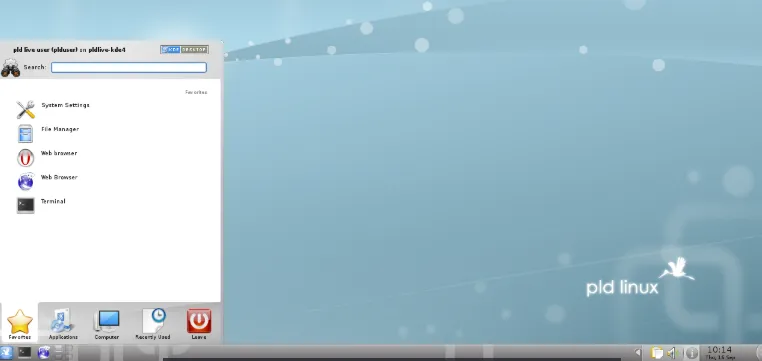
PLD Linux Distribution is an RPM-based Linux distro crafted for advanced users and system administrators who prefer a highly flexible, finely controlled environment instead of a pre-packaged desktop experience. Built for those who enjoy tuning, optimizing, and maintaining every layer of the system, PLD delivers a fast, raw, and consistent approach to Linux computing across multiple hardware architectures.
Understanding What Makes PLD Linux Different
Most mainstream Linux distributions aim for graphical convenience and automated tools to simplify system management. PLD takes the opposite direction. It favors full administrative power, transparent operation, and direct control over package behavior. This makes it an ideal environment for users who want a dependable, uniform workspace across various CPU families while maintaining a streamlined and efficient system.
Its approach appeals to network administrators, Linux veterans, and developers who value predictability, long-term compatibility, and intentional minimalism. PLD avoids bloat, encourages deep system mastery, and maintains a strict technical design philosophy that rewards informed decisions rather than automated shortcuts.
A Multi-Architecture Distribution Built for Serious Work
One of PLD Linux Distribution’s strongest advantages is its broad architecture support. Few RPM-based distros maintain consistent package behavior across numerous hardware families, yet PLD manages to unify the experience. This is essential for environments that rely on diverse hardware ecosystems, embedded devices, or legacy systems that must run alongside modern platforms.
- x86 and x86_64 for mainstream desktops and servers
- ARM for embedded and low-power devices
- PowerPC for older systems and specialized hardware
- Alpha, Sparc, and other niche architectures for legacy or experimental usage
This multi-architecture consistency allows developers and organizations to maintain uniform behavior across various machines, reducing fragmentation and making large-scale deployments more predictable.
A Non-Conservative RPM Philosophy
PLD Linux Distribution uses RPM packages but does so in a modern, non-conservative style. Instead of clinging to legacy conventions or overly restrictive packaging policies, PLD evolves aggressively, updating packages quickly and optimizing for practical use rather than slow-moving enterprise standards.
This gives the system a unique personality: it is stable enough for daily use and professional workloads, yet flexible and fresh enough to satisfy developers who want cutting-edge software without losing the advantages of the RPM format. The combination of speed, openness, and consistency positions PLD as one of the most technically interesting RPM distributions available today.
Designed for Administrators Who Demand Control
PLD Linux Distribution does not assume the user needs automated tools, guided wizards, or simplified configuration utilities. Instead, it targets professionals who prefer to modify system components by hand, script their own processes, and maintain full visibility over package operations. Everything is built to be understood, maintained, and customized with intention.
- Manual configuration options for almost all system components
- Predictable package behavior with minimal abstraction
- A lean system base that allows the user to build upward intentionally
- High consistency across architectures for controlled deployments
This philosophy means PLD may not be suitable for absolute beginners, but it becomes a powerful tool for administrators who appreciate clarity over convenience and who value the stability that comes from understanding every component of the system.
Performance and Efficiency Out of the Box
Since PLD Linux Distribution avoids unnecessary background services and graphical overhead, it delivers performance benefits right from the start. The base system is lightweight, responsive, and optimized for efficiency. Administrators can build only what they need, resulting in an operating system that runs smoothly on both modern hardware and older machines.
Its RPM system is tuned for speed, and its repository structure ensures quick access to updates while maintaining package integrity. This gives PLD a pragmatic edge in scenarios where reliability and performance outweigh cosmetic features.
Why This Matters
PLD Linux Distribution stands out as one of the few RPM-based systems designed specifically for users who understand Linux deeply and need an environment that respects that expertise. Its multi-architecture support, straightforward configuration model, and non-conservative RPM approach create a valuable ecosystem for administrators, developers, and technical professionals.
For organizations and individuals that depend on predictable behavior across diverse hardware platforms, PLD offers a consistent and dependable solution. Its design encourages mastery and provides the precision required for serious work—qualities increasingly rare in a world dominated by automatic installers and simplified desktop environments.
Explore PLD Linux Distribution
To explore PLD Linux Distribution, review its capabilities, or download the ISO, simply visit the official website: Get Download of the ISO.