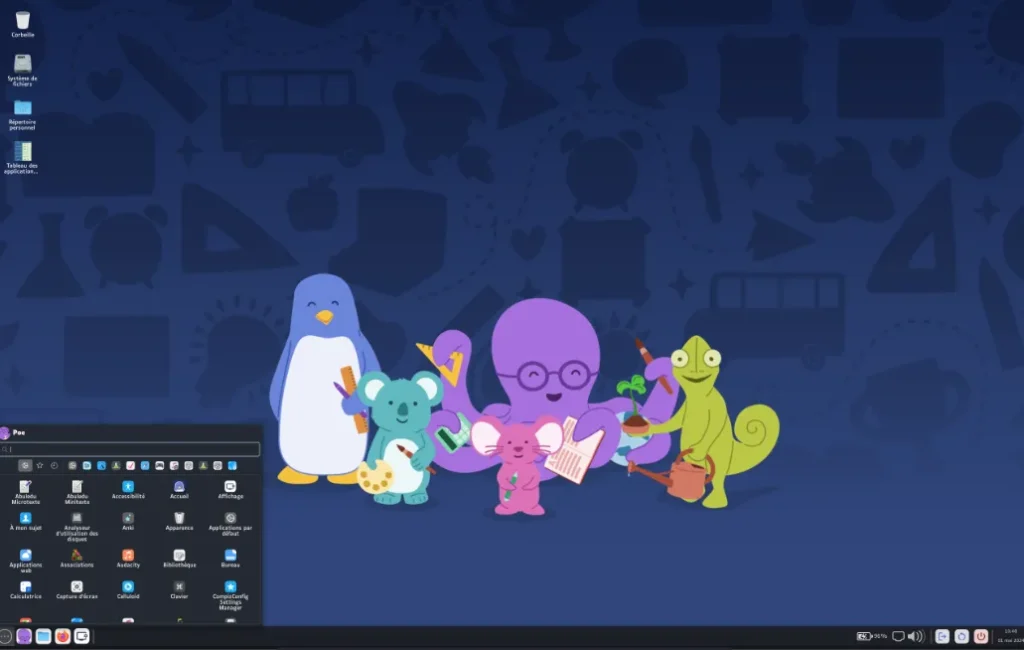
PrimTux Linux Distribution is a resource-efficient operating system based on Debian and Ubuntu, designed to restore usability to legacy hardware while offering a stable and functional environment for institutions and professionals who require dependable performance without relying on modern, high-end machines. Built by a small team of GNU/Linux practitioners and enthusiasts, PrimTux focuses on practicality, system longevity, and operational efficiency rather than aesthetics or contemporary computing demands. Its value lies in delivering a robust solution for environments that aim to extend equipment lifespan, optimize costs, and maintain operational continuity using older devices.
The distribution avoids unnecessary bloating that typically burdens older computers, instead prioritizing minimal resource consumption and predictable performance. While numerous GNU/Linux systems cater to modern desktops, PrimTux sets itself apart by providing a highly tuned environment specifically engineered for outdated hardware that can still perform essential tasks when paired with the right software optimization. This philosophy makes the system compelling for any use case where longevity, sustainability, and low operational cost are strategic priorities.
Why PrimTux Matters in Legacy and Low-Spec Environments
Modern operating systems have steadily increased their hardware requirements over the years. Many machines considered obsolete today still retain functional components but fail to meet the thresholds demanded by contemporary systems. PrimTux provides a solution by preserving the operational potential of this hardware. It transforms outdated devices into usable, efficient, and responsive workstations capable of everyday computing tasks such as document editing, web browsing, data handling, and light administrative routines.
- Extends the functional life of old hardware
- Minimizes operational costs for institutions and organizations
- Reduces electronic waste by reusing existing equipment
- Provides a controlled, stable environment suitable for long-term use
In many public institutions, community programs, NGOs, and internal IT infrastructures with limited budgets, the ability to restore hardware rather than replace it represents a significant strategic advantage. PrimTux fills precisely that gap, delivering a streamlined GNU/Linux environment capable of breathing new life into devices that would otherwise remain unused or discarded.
System Architecture and Technical Foundations
PrimTux leverages the power and maturity of Debian and Ubuntu, two of the most reliable and time-tested ecosystems in the GNU/Linux world. This foundation grants access to extensive repositories, broader hardware compatibility, and consistent security updates. The choice of these bases ensures predictable behavior and simplifies system maintenance for administrators familiar with mainstream Debian-based deployments.
Debian’s reputation for stability combined with Ubuntu’s extended software support produces an environment that balances lightweight performance with modern package availability. PrimTux inherits the benefits of both platforms while optimizing performance through selective component integration, minimal background processes, and efficient desktop environments tailored to low-spec hardware.
- Stable Debian/Ubuntu hybrid foundation
- Large software repositories with long-term support
- Low memory footprint for smooth performance
- Predictable upgrade paths and easy maintenance
This combination allows PrimTux to remain compatible with an extensive range of older systems, providing an operating environment that continues to function reliably even on machines with limited RAM, outdated CPUs, or older hard-drive technologies.
Performance Engineering and Low Resource Consumption
One of PrimTux’s strengths is its performance-first design philosophy. The developers focus on reducing system overhead, avoiding unnecessary services, and choosing desktop environments that run smoothly on legacy hardware. These choices dramatically enhance responsiveness and usability, even when hardware configurations fall below what most modern systems consider appropriate.
By removing redundant background services and heavy graphical components, PrimTux accelerates load times and minimizes CPU usage. This level of optimization makes it possible for devices with limited capabilities to perform everyday tasks efficiently. The distribution is particularly effective in contexts where hardware uniformity cannot be guaranteed, as it adjusts well to a wide spectrum of older architectures.
- Efficient desktop environments suited for minimal RAM
- Fast startup and shutdown processes
- Low CPU load for smoother multitasking on old processors
- Minimal disk usage and scalable footprint
The end result is a system that feels purpose-built for legacy hardware, ensuring stability and responsiveness where heavier operating systems would struggle. This practicality is a defining factor in environments that intend to operate numerous refurbished machines without risk of excessive resource demands.
Operational Use Cases Across Different Scenarios
Although PrimTux originated with a focus on educational settings, its architecture and design extend well beyond that scope. The system fits various operational models where reliability and low resource usage are essential. Institutions with limited infrastructure budgets benefit significantly from a Linux distribution capable of restoring value to aging equipment, enabling smooth workflows without costly upgrades.
- Public sector offices using older hardware fleets
- Community centers and digital inclusion initiatives
- Internal corporate setups requiring lightweight workstations
- Libraries, NGOs, and other public access systems
- Recycling and refurbishment programs
In each scenario, PrimTux offers an environment that remains stable, predictable, and efficient. It is particularly suitable for organizations aiming to deploy dozens or hundreds of restored machines while maintaining centralized maintenance, consistent performance, and long-term sustainability.
Maintenance, Stability, and Long-Term Sustainability
The long-term sustainability of PrimTux is strongly supported by its Debian-based roots. System updates follow predictable schedules, and administrative tasks remain simple for anyone familiar with APT-based package management. Security patches and repository updates maintain system integrity over extended operational periods, making it a dependable solution for long-term deployment strategies.
Beyond stability, PrimTux maintains an ecosystem that emphasizes low maintenance complexity. The system’s minimalistic design reduces the likelihood of component failures, misconfigurations, or performance degradation over time. This contributes to predictable, low-touch system behavior—a key requirement for environments that lack extensive technical staffing or advanced IT infrastructure.
Final Thoughts on PrimTux Linux Distribution
PrimTux Linux Distribution stands out as a practical and efficient solution for reviving outdated hardware and transforming it into a functional computing asset. Its balance of minimal resource consumption, Debian-based stability, and lightweight performance allows organizations and institutions to maximize their existing equipment without compromising usability. Whether used in public environments, internal infrastructures, or large-scale refurbishment projects, PrimTux offers the technical reliability and operational efficiency required to keep legacy machines productive for years to come.
To explore PrimTux, review its capabilities, or download the ISO, simply visit the official website: Get Download of the ISO.